CR · P06
The Keeping
Part Five of five. Six parties, one line, and no money at all.
What she has found cannot be used by one person, and it cannot be used by anybody until six of them agree — so she goes and asks.
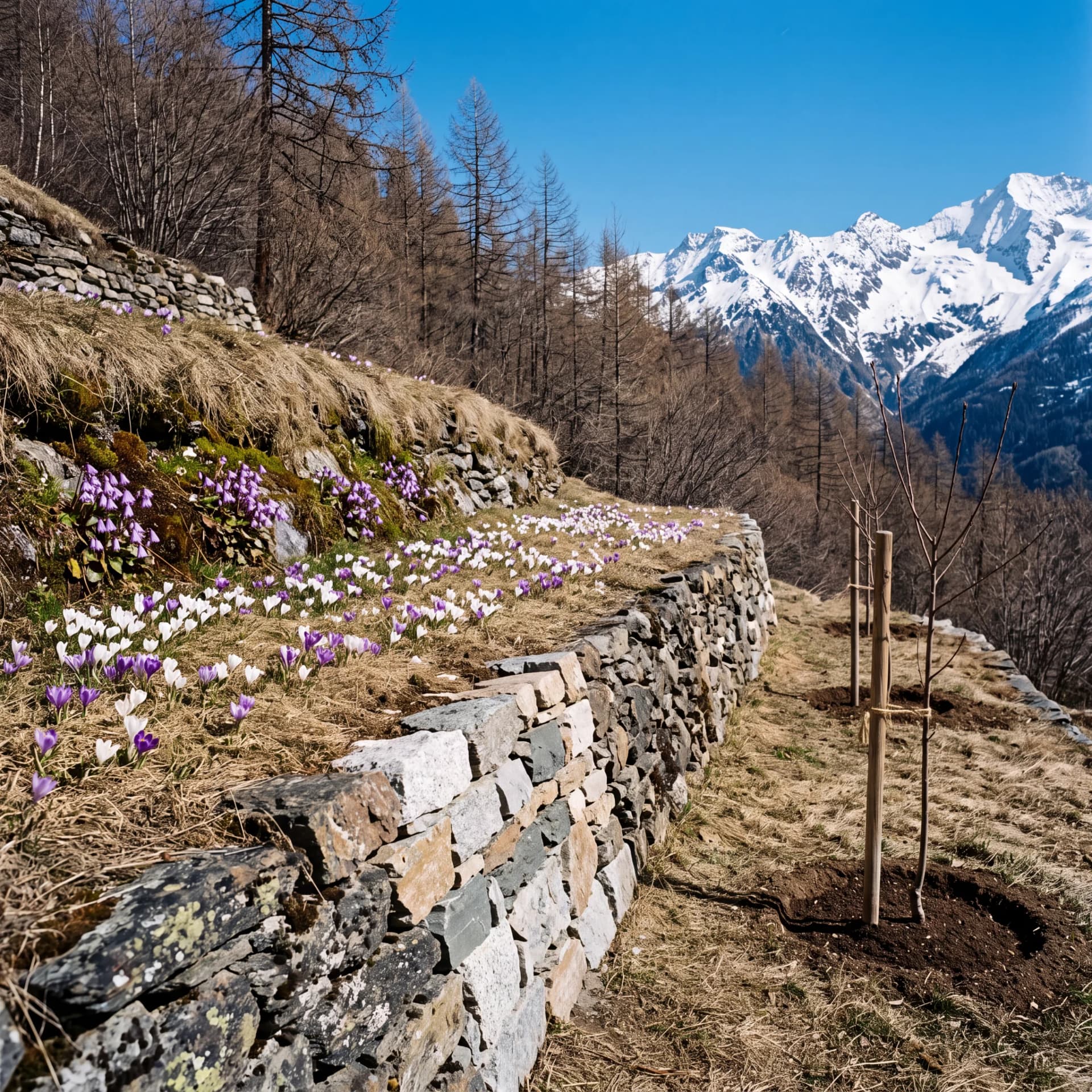
There is a way to get water onto ground above the channel and it is not clever: you take it at the head, where the act says her people always took it, and you run it along the old line of 1430 in a buried pipe. Nine hundred metres. A hundred and eighty metres of fall. It is not engineering, a young man tells her at the intake; it is plumbing. The hard part is the four people and the year of paper.
Except that it is not four people. The same line serves six holdings on the same shelf with the same problem, and not one of them can do anything alone. A nurseryman signs his consent on the back of a seed order and gives her two cherry trees nobody has taken. A retired schoolmaster asks the actual question, which is what the bourgeoisie gets out of it, and answers it himself. The commune president refuses to have the conversation at all, and tells her exactly which channel it must come through instead.
An old man in a barn says the thing the whole sequence rests on: do not do it on a nod, because a nod dies with the man who gave it, and he has watched four of them die. Write it down. Get it signed. Get it in a book that somebody has to keep.
Six parties who cannot act alone, one line of water, and a young woman with a thousand francs and a winter’s work coming in. Whether they will put their names to it, and what it will cost her to ask, is the last part of the book — and it is not given away here.
The book
Five parts — first water, the set, the thinning, the windfall, the keeping — and one year on a shoulder above the Rhône where the channel decides what is worth anything. The villages are where I say they are and the water law is the water law. The ground the story stands on does not exist and never did. It is Jacquard fiction: history woven into the future of AI.