CR · P03
The Set
Part Two of five. An act of 1430, and a bill nobody can pay.
She reports what she has found to thirty people in a room above a café, and then finds the thing underneath it — and the valley discovers that being right is not the same as being able to afford it.
The committee hears her in June and does not know what to do with her. The consortage has been asked to prove it owns its own water; what she has brought them instead is a question about who was left out of it, and when. The matter is adjourned to the November assembly, which is how a valley says later in writing. One man observes that if anybody is going to be the person who found it, it was always going to be her.
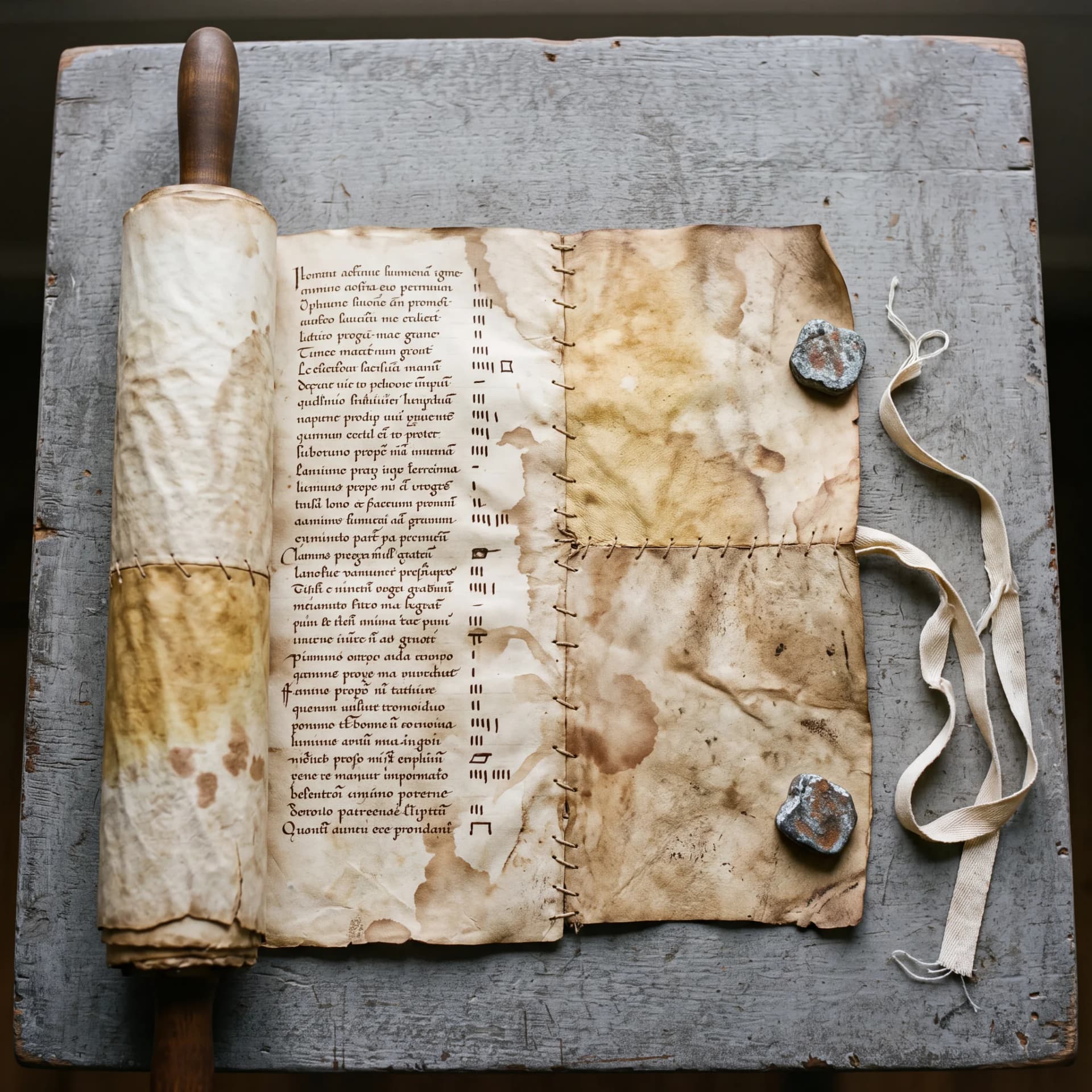
In July she finds the act itself. It is in the second box, struck through corner to corner with two diagonal strokes — which does not mean cancelled, as she has been taught, but means issued. Forty-one men of the community, on the sixth of June 1430, contracting with a master from Loèche to bring a water from the torrent above the Comba. Eight hundred and eleven florins, raised among themselves. And a covenant in the twenty-second line: the water shall belong in common to those who have borne the charge of it, to each in the measure of what he has paid, and to their heirs holding the same lands.
It answers the commune completely. The consortage does not hold its water because nobody stopped it. It holds it by purchase, and it has done since before the canton existed.
The commune, asked for the sealed copy in its own chest, refuses. The applicant, its adviser observes, appears to have a direct legal interest in the outcome, and the request is deferred pending examination.
In August she reads the roll from the inside out instead of the outside in, and finds at its core the original list: forty-one names, with the sums beside them — and beside one of them, a mark she has seen before.
She takes it to the president at twenty past eleven at night, because the condition says on the day.
“You’ve brought me a bill,” he said.
What the bill is, and who could ever pay it, is the second part of the book.
The book
Five parts — first water, the set, the thinning, the windfall, the keeping — and one year on a shoulder above the Rhône where the channel decides what is worth anything. The villages are where I say they are and the water law is the water law. The ground the story stands on does not exist and never did. It is Jacquard fiction: history woven into the future of AI.