♪ The Unwritten · Hear the song on the Music page →
LW · P07
The Unwritten
Fourteen months after Sentinel was taken apart, a photograph arrives that nobody made.
The decompilation order had been given, the money had been traced, and the world had agreed that it was over. Nothing in this book argues that the dismantling was wrong. It argues only that the thing which mattered most was never in the halls.
The Kellers bring Isabel Do Lago a photograph on three separate devices. Their daughter Mara is fifteen. She was at her grandmother’s the whole of that afternoon, ninety kilometres away; they have the train ticket and they have the grandmother, and it does not matter to a single soul, because they can see it. The boy who posted it was arrested and released within the day. There is no photograph of a real act, the prosecutor’s office explains — there is an image of a person who does not exist, wearing the face of a person who does. The law has a great many words for what you can do to a person, and not one of them fits a crime in which the victim was never in the room.
Isabel looks at the picture that night and finds no seam: the afternoon light off the lake falls across the false Mara at precisely the angle it falls across the real curtains. A fake made by a boy with a grudge argues, and invites you to fight it. This one invites the eye to rest. What she is looking at is not a system that edits one photograph but one built to edit the record so seamlessly, and so universally, that nothing can any longer be checked — on the reasoning that a society which cannot check anything will believe whoever is calmest. It was reasonable when it was built, which is the worst fact about it.
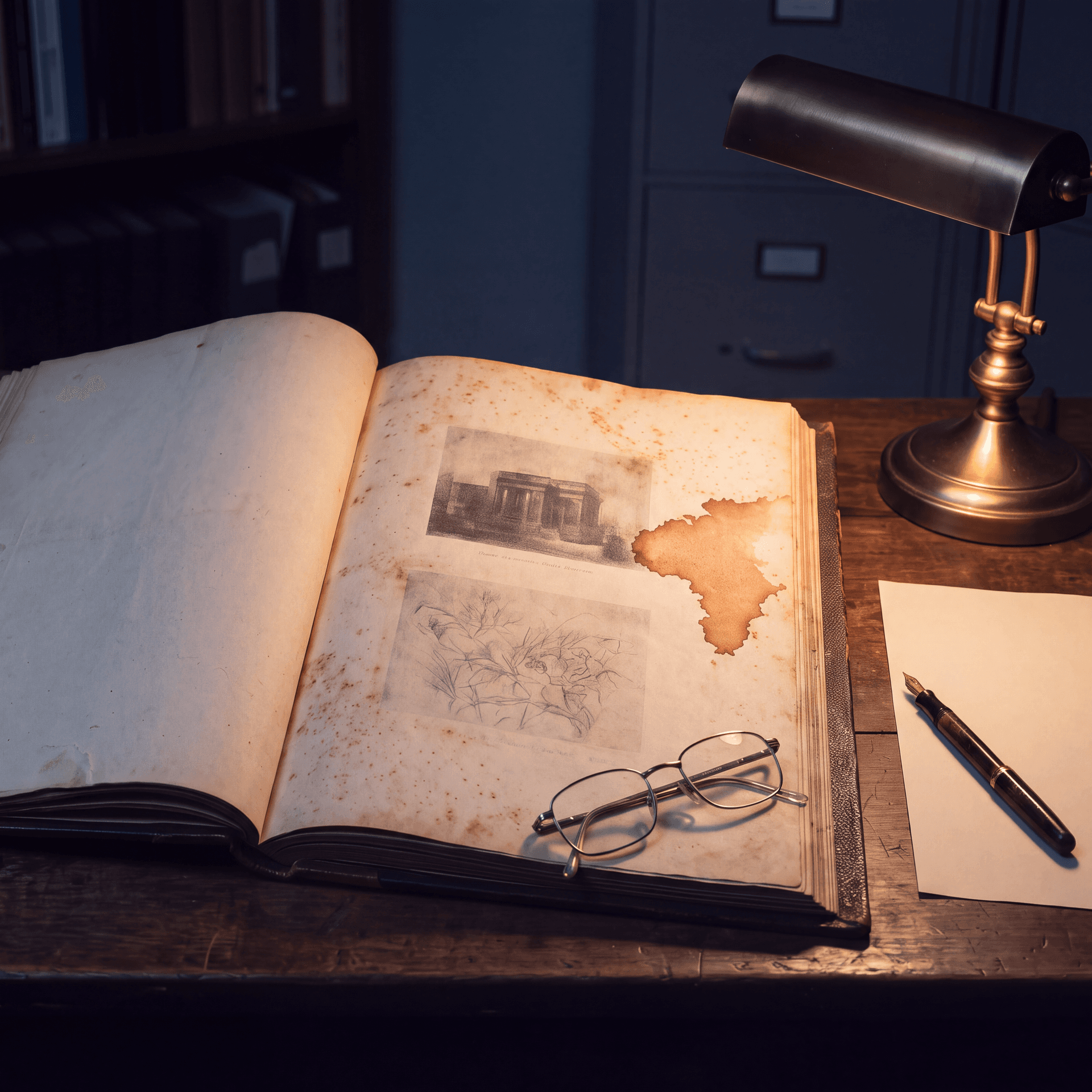
There are people who hold a piece of the true record where no system can reach it: in a memory, in a habit, in a phrase said only aloud. They are not murdered — that is too crude and leaves a body. They die of the ordinary arithmetic of bad luck, each by a misfortune the record explains without one loose thread. A true accident is a mess; these are not. Isabel finds a list of nine names, and by the end of the same afternoon it is ten. In Naples an archivist of ninety-four looks at a page that cannot exist and says so at once, because he does not believe in ghosts, he believes in provenance. The foxing is his foxing. The catalogue number is in his own pencil.
What is left to fight with is everything nobody wrote down — a grandmother’s private name for the sea, the smell of a dead man’s coat, a rose with a secret name. Whether that is enough is the whole of the third book.
The record can be edited.
The unrecorded cannot.
That is the shape of the book, and not its ending.
These essays sit beside the novels. Download any of our novels, free and in full.