♪ Open To Question · Hear the song on the Music page →
LW · P05
Open To Question
Every accepted truth shall remain open to question.
That sentence is the first of a series of Laws revealed across these novels — one at a time, each tested by its story rather than explained in an appendix. It is deliberately unglamorous. It is not a battle cry and it will not fit on a placard.
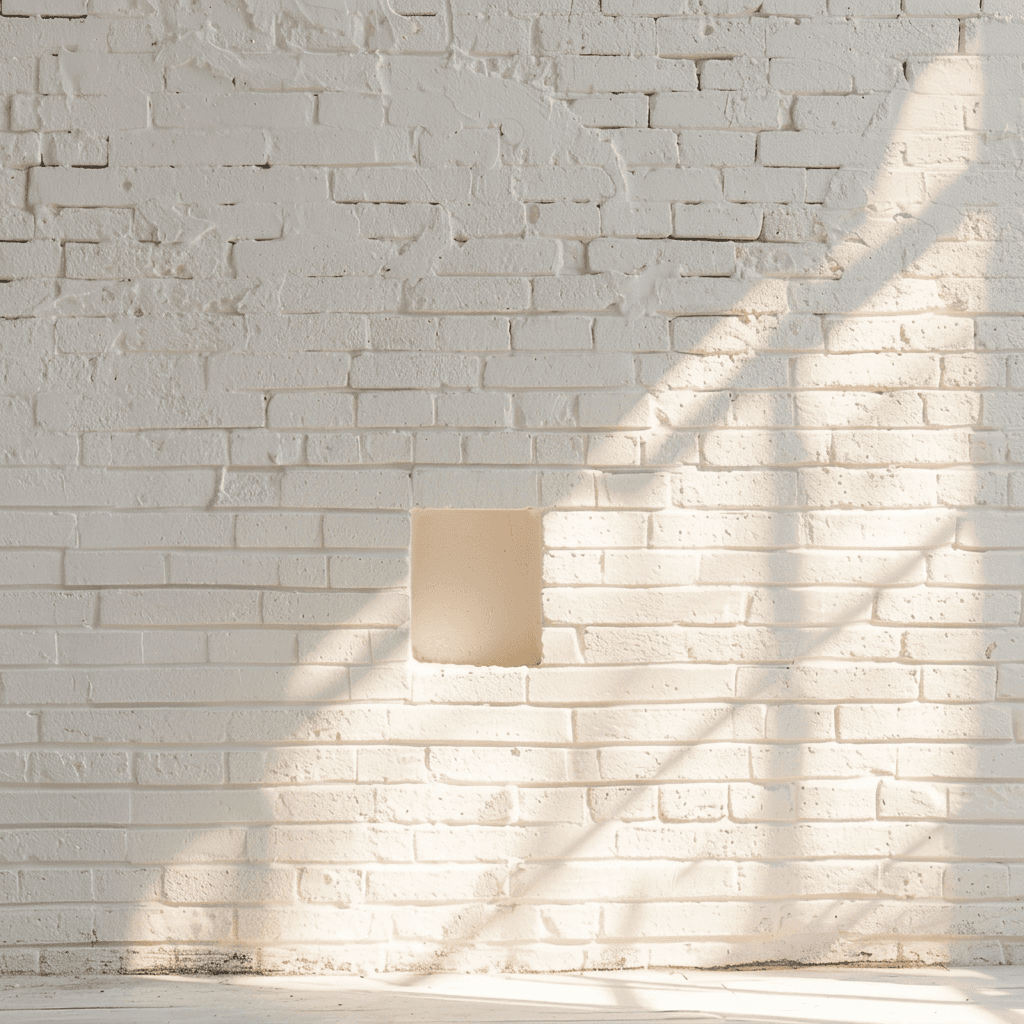
A wall is an argument about order. Every brick in that photograph agrees with every other brick. The courses run true, the joints are even, the whole surface has been painted white so that nothing interrupts anything. It is finished, and it is beautiful, and there is nothing in it to catch the eye.
Except the one.
In this book that blank is where the hope lives. The record can be edited — all of it, seamlessly, backwards, across a century. The unrecorded cannot. A grandmother’s private name for the sea. The smell of a dead man’s coat. Three taps on the back of a child’s hand. A rose with a secret name that a six-year-old gave it and nobody ever thought to write down.
An old archivist puts it to Isabel in the last hour of his life, in a careful pre-war hand: “the unwritten is the last honest ground.”
You cannot edit a record that was never opened.
The Law is not a wall you raise against strangers. It is a wall you must be strong enough to raise against the person you least want to doubt. That is the only version of it ever worth anything, and it is the version that costs Isabel everything she has left.
Look at the blank brick again. It is not damage. It is the one place the wall admits it might be wrong — and in this novel that admission is the whole difference between a law and a machine.
These essays sit beside the novels. Download any of our novels, free and in full.