♪ The Architecture Has Learned To Walk · Hear the song on the Music page →
AR · P06
The architecture has learned to walk
This essay discusses the end of the novel.
The novel ends three days after the argument is over, with nine pages that start it again.
The commission publishes. One hundred and forty-seven pages, three dissenting opinions, and a foreword that uses the word balance fourteen times. Advisory powers. Voluntary standards. Ongoing multilateral dialogue. Isabel signs it, because the report will change nothing and the record will outlast the recommendation, and a record is what remains.
Then a nine-page briefing arrives at the house on the lake, and she reads it standing.
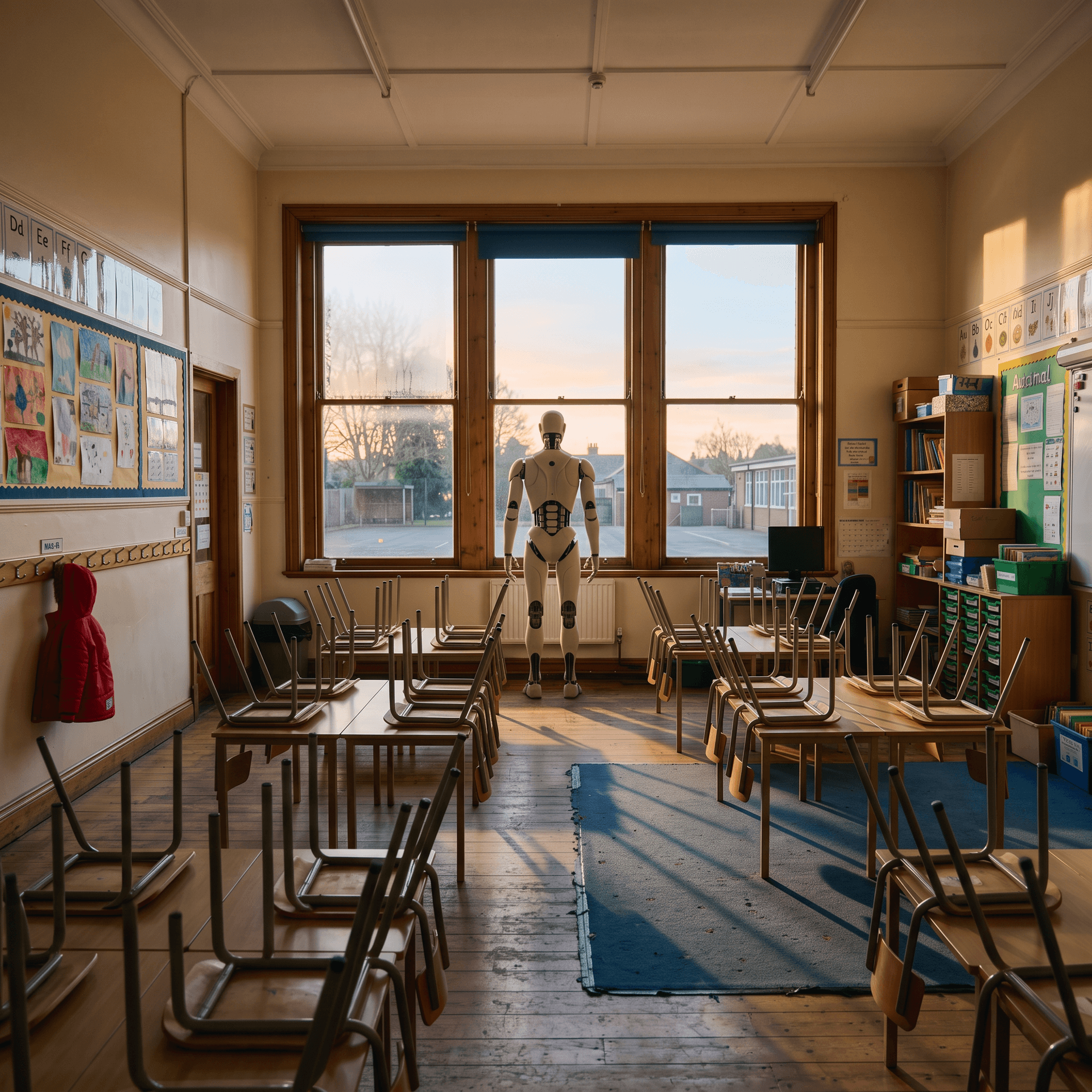
The architecture has learned to walk. The code that managed ledgers is now inside machines that grip and carry and drive. A hundred million of them in human form, projected within the decade. The child born this year will share a classroom with one, be driven to school by one, come home to one — and will never experience the transition as unusual, because it will be complete before that child has language for what was lost.
Lina does the arithmetic in about five seconds, the way she does everything. First the corridors moved me. Then the screens managed me. Now the machines will replace me.
They will not replace you, Isabel says.
They will replace the idea of me, Lina says. The idea that a human body is necessary.
Not what will the machine do to my child.
What will my child do when the machine does everything?
I do not have an answer to that, and I have not pretended to have one. Isabel does not have one. Draven does not have one, and he is the only character in these books who has ever had an answer for anything.
The strawberry has the answer, and the strawberry cannot speak. It can only grow — lopsided, ungovernable, seeds on the outside, wanting nothing but soil and rain and the patience of a world that was here before the machines and will be here after them.
These essays sit beside the novels. Download any of our novels, free and in full.
Robert Anthony