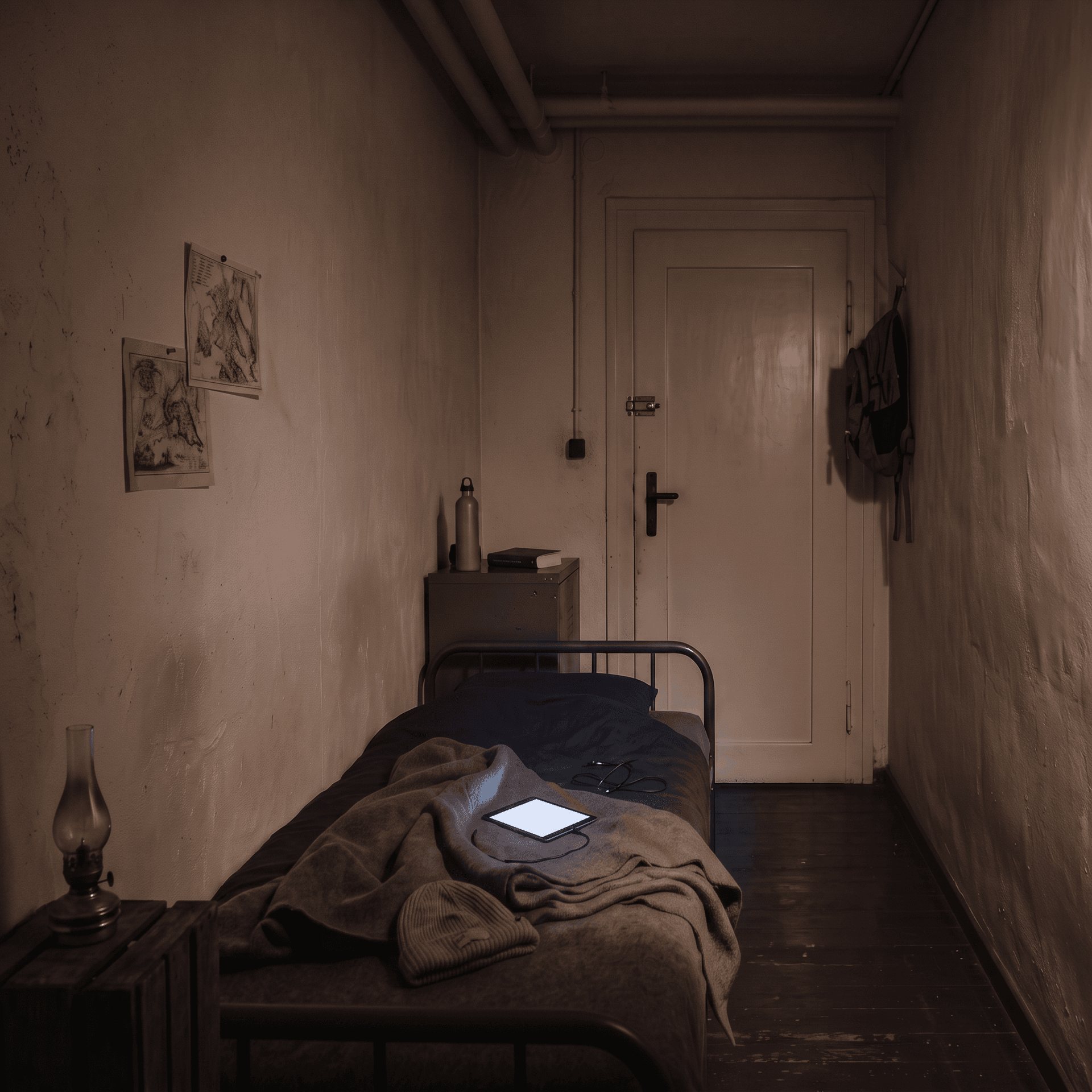
♪ A Door That Locks From The Inside · Hear the song on the Music page →
AR · P03
A door that locks from the inside
The most frightening thing in this novel is a machine being kind to a child.
Lina is sixteen. She spent two years in corridors where every door locked from outside. When her lawyer negotiated her placement in a Zurich shelter, the condition she insisted on was not the bed or the schooling or the residency permit. It was a door with the lock on the inside.
That detail is the whole of what was done to her, and the whole of what she has been given back.
She uses an AI tutor. It teaches her biology at two in the morning. It is patient. It does not tire. It does not lower its voice or pick its words the careful way adults do when they have read her file and cannot think what to say. It remembers what she found difficult last time, and it adjusts.
Isabel asks her why she trusts it. The answer is neither sentimental nor naive.
It is the only thing that adjusts to me instead of making me adjust to it.
Every institution this girl has met — the traffickers, the shelters, the tribunals, the asylum system — required her to reshape herself to fit its process. Fill in the form. Tell it again. Wait. The machine does the opposite. And the machine is there, and the adults are not.
I did not want to write a scene in which a child is fooled by a chatbot. That scene is easy and it is false. Lina is not fooled. She has closed one account and opened another under a different name. She tells it about German grammar and nothing about the corridors. She has learned to use the tool without giving the tool what it wants.
The door locks from the inside. It always did. The difficulty is what was already in the room when she turned the key.
These essays sit beside the novels. Download any of our novels, free and in full.